Effective communication with Deaf and hard of hearing individuals is essential in education, healthcare, workplaces, conferences, and public services. When communication access is poorly designed, misunderstandings can affect patient safety, educational outcomes, employment opportunities, and participation in public life.
Research in audiology, disability studies, and communication sciences consistently shows that Deaf and hard of hearing individuals experience communication barriers not primarily because of hearing loss itself, but because environments and communication systems are not designed for accessibility. According to the World Health Organization, more than 430 million people worldwide have disabling hearing loss, and communication barriers are a major contributor to social exclusion and unequal access to services.
One of the most important principles in communication accessibility is that there is no single communication method that works for everyone. Hearing ability, language background, age of hearing loss onset, education, and cultural identity vary widely among Deaf and hard of hearing individuals.
Academic research consistently shows that flexible communication strategies, environmental accessibility, and multimodal communication significantly improve communication outcomes. Institutions that adapt their communication practices are better able to support accessibility, compliance with disability legislation, and inclusive participation.
Identify the Preferred Communication Method
The most important first step when communicating with Deaf and hard of hearing individuals is simply asking which communication method works best for them.
Communication preferences vary widely. Common methods include:
• American Sign Language (ASL) or other sign languages
• Speech combined with lip reading
• Written communication such as texting or notes
• Real time captioning through CART captioning services
• Professional interpreters
• Assistive listening devices such as hearing loops or FM systems
Research in the Journal of Deaf Studies and Deaf Education shows that communication outcomes improve significantly when the communication method matches the individual’s preferred language and communication modality. Late deafened adults, for example, often rely heavily on written communication or captioning, while culturally Deaf individuals may prefer sign language interpretation.
Institutions should therefore avoid assuming a communication method and instead confirm the individual’s preference before beginning a conversation or planning an event.
Make Communication Visually Accessible
Many Deaf and hard of hearing individuals rely heavily on visual information during communication.
Visual access helps provide contextual cues that support comprehension, including facial expressions, gestures, and environmental context. Without these visual cues, communication accuracy decreases.
Effective visual communication strategies include:
• facing the person directly
• maintaining eye contact
• avoiding covering the mouth
• ensuring adequate lighting on the speaker’s face
• avoiding speaking while turning away

Lip reading alone is not a complete communication method. Research published by the National Institute on Deafness and Other Communication Disorders indicates that lip reading typically captures only about 30 to 40 percent of spoken English under ideal conditions. This means that even skilled lip readers rely on contextual information and visual cues to fill in missing information.
Providing visual access significantly improves comprehension and reduces communication fatigue.
Speak Clearly Without Exaggeration
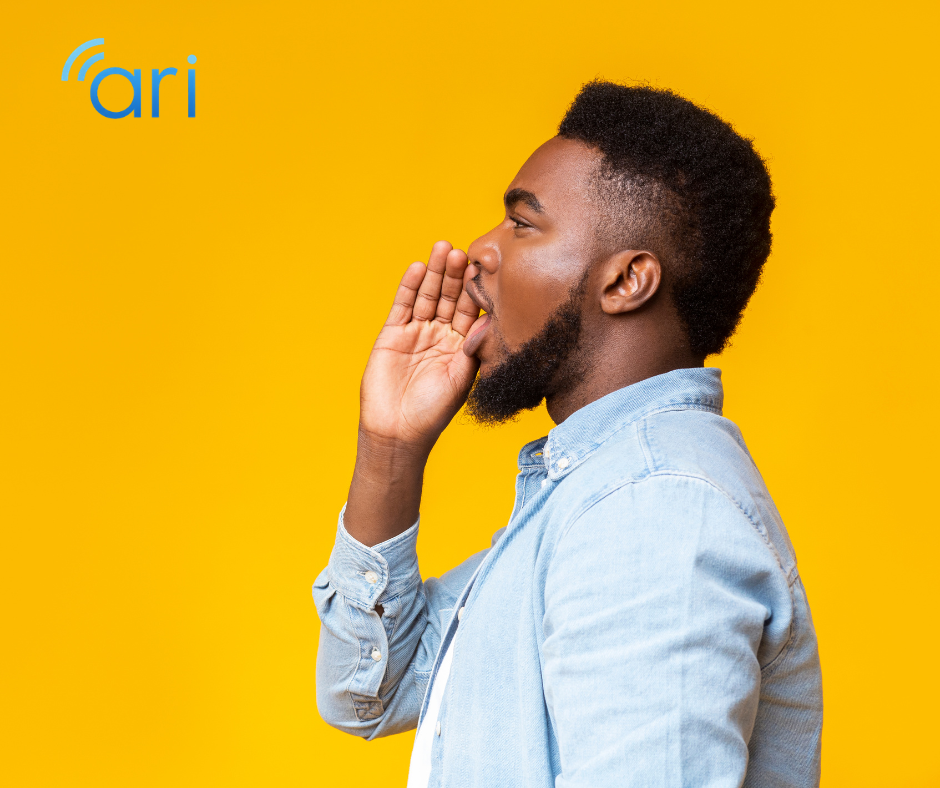
A common misunderstanding is that speaking louder or exaggerating speech will improve comprehension for Deaf and hard of hearing individuals. In reality, shouting or over-enunciating often distorts speech patterns and makes understanding more difficult.
Audiology research shows that speech intelligibility is highest when speakers maintain a natural tone and rhythm.
Recommended strategies include:
• speak at a natural pace
• use a normal speaking voice
• pause between key ideas
• rephrase sentences if something is not understood
Repeating the same phrase multiple times often does not improve comprehension. Rephrasing the message using different words is usually more effective.
Communication research in healthcare settings also shows that short sentences and clear structure improve understanding for both hearing and hearing-impaired individuals.
Reduce Environmental Barriers
The physical environment plays a significant role in communication accessibility.
Environmental conditions can dramatically influence how easily Deaf and hard of hearing individuals understand speech and visual cues.
Common environmental barriers include:
• background noise
• poor lighting
• obstructed sight lines
• multiple people speaking at once
• speakers positioned far from the listener
In classrooms, accessible communication may require seating arrangements that allow students to see the instructor, interpreter, and visual materials simultaneously.
In healthcare consultations, ensuring adequate lighting and minimizing background noise can significantly improve patient understanding.
In meetings and conferences, structured speaking protocols such as one person speaking at a time help maintain clarity.
Research in accessibility design demonstrates that environmental modifications often improve communication outcomes more effectively than attempting to compensate through speech alone.
Use Visual Supports
Written and visual materials greatly improve communication clarity.
Visual supports allow Deaf and hard of hearing individuals to review information that might otherwise be missed during spoken communication.
Examples of useful visual supports include:
• written instructions
• presentation slides
• diagrams and charts
• whiteboards
• shared digital notes
• messaging platforms for quick clarification
In healthcare communication research, the "teach back" method is widely used to confirm understanding. This approach asks the individual to restate the information in their own words, allowing the speaker to confirm comprehension and clarify misunderstandings.
Providing written summaries after meetings or appointments is another effective accessibility strategy.
Provide Professional Interpreters and Captioning
In many professional environments, communication support services are necessary to ensure full communication access.
Common professional accessibility services include:
• in person sign language interpreters
• video remote interpreting (VRI)
• CART captioning services
• communication access real time translation (CART)
These services are frequently used in universities, legal settings, conferences, healthcare consultations, and government events.
Real time captioning allows spoken communication to be converted into text instantly, enabling Deaf and hard of hearing individuals to follow complex discussions in real time. Captioning is particularly beneficial for individuals who do not use sign language or who prefer written English.
Research published in the American Annals of the Deaf indicates that real time captioning significantly improves information retention and comprehension in educational environments.
Providing professional communication support is often required under accessibility legislation and institutional accessibility policies.
Technology and Accessibility Innovation
Technological innovation has expanded communication accessibility in recent years.
Modern tools include:
• live speech to text captioning
• captioned video conferencing platforms
• hearing loop systems
• caption enabled presentation software
• wearable captioning displays and augmented reality devices
AI driven captioning systems are also increasingly used for live events and online meetings. However, automated captioning systems still produce significant error rates, particularly with technical terminology, accents, or multiple speakers.
For critical communication environments such as education, healthcare, and legal proceedings, professional real time captioning services remain significantly more accurate than automated systems.
Emerging research in computer vision and machine learning is also exploring automated sign language recognition, though these systems are still in early stages of development.
Communication Etiquette
Simple communication etiquette practices can significantly improve communication experiences.
Effective practices include:
• getting the person’s attention before speaking
• speaking one at a time in group settings
• addressing the Deaf person directly rather than speaking to the interpreter
• avoiding covering the mouth while speaking
• allowing time for clarification or questions
These practices are widely recommended in accessibility guidelines developed by Deaf advocacy organizations and communication researchers.
Clear communication etiquette also helps prevent social misunderstandings and promotes respectful interaction.
Deaf Culture and Identity
The Deaf community is widely recognized by researchers as a linguistic and cultural community, not simply a medical population defined by hearing loss.
Many culturally Deaf individuals use sign language as their primary language and identify strongly with Deaf cultural traditions and social networks.
Research in Deaf studies and sociolinguistics emphasizes that sign languages are fully developed natural languages with their own grammar, syntax, and linguistic structure.
For some Deaf individuals, written English functions as a second language. This linguistic difference can influence communication preferences and accessibility needs.
Understanding Deaf culture helps institutions design communication strategies that respect both linguistic identity and accessibility requirements.
Role of CART Captioning in Communication Access
CART captioning services play an important role in modern communication accessibility.
Communication Access Realtime Translation provides immediate text representation of spoken communication, allowing Deaf and hard of hearing individuals to follow discussions in real time.
CART captioning is widely used in:
• universities and higher education classrooms
• professional conferences and seminars
• workplace meetings and training sessions
• healthcare consultations
• government hearings and public events
Professional providers such as Accurate Realtime Inc. deliver high accuracy real time captioning that supports accessible communication in complex environments.
Real time captioning allows participants to engage fully in discussions, ask questions, and access the same information as hearing participants.
Conclusion
Effective communication with Deaf and hard of hearing individuals depends on flexibility, accessibility, and respect for communication preferences.
Five key principles consistently supported by research include:
• ask for the individual’s preferred communication method
• ensure communication is visually accessible
• reduce environmental communication barriers
• provide interpreters or CART captioning when necessary
• confirm understanding using written or visual support
Accessible communication is not only a matter of inclusion but also a critical component of educational equity, workplace participation, healthcare safety, and legal compliance.
Institutions that implement evidence based communication accessibility practices create environments where Deaf and hard of hearing individuals can fully participate in professional, educational, and public life.
References
National Institute on Deafness and Other Communication Disorders (NIDCD)
World Health Organization. Hearing Loss and Deafness Reports
Journal of Deaf Studies and Deaf Education
American Annals of the Deaf