Ludwig van Beethoven (1770–1827) remains one of the most influential composers in Western music history. His work transformed classical composition and continues to shape modern musical thought. What makes Beethoven’s legacy particularly significant is that many of his greatest compositions were written while he was experiencing severe hearing loss.
Historical records show that Beethoven began losing his hearing in his late twenties and was functionally deaf by the later part of his life. Despite this profound disability, he continued composing some of the most innovative and complex music ever written. His life is frequently cited in discussions of disability and creativity, demonstrating that hearing loss does not eliminate intellectual or artistic ability.
For institutions today that aim to build inclusive environments, Beethoven’s story also highlights the importance of communication accessibility for Deaf and hard of hearing individuals. Modern technologies such as CART captioning services now make participation in education, conferences, and professional environments far more accessible than in Beethoven’s time.

The Onset of Beethoven’s Hearing Loss
Historical documentation indicates that Beethoven began experiencing symptoms of hearing loss around 1796, when he was approximately 26 years old. Letters written to friends and colleagues reveal increasing anxiety about his condition.
One of the most important historical documents regarding Beethoven’s hearing loss is the Heiligenstadt Testament, a letter written in 1802 to his brothers. In this document Beethoven described his growing isolation and despair caused by his inability to hear conversations clearly.
Music historians widely consider this document to be strong evidence of both the emotional impact and the progression of Beethoven’s deafness. According to research summarized in Oxford Music Online, Beethoven reported symptoms such as tinnitus, difficulty hearing high frequencies, and increasing social withdrawal.
Medical historians have proposed several possible causes for his hearing loss, including otosclerosis, autoimmune disease, and lead poisoning. However, no definitive diagnosis has been confirmed because modern medical testing was unavailable during his lifetime.
Despite the deterioration of his hearing, Beethoven continued composing, performing, and conducting during the early stages of the condition.
Progression Toward Deafness
By the 1810s Beethoven’s hearing had deteriorated dramatically. Contemporary accounts from friends and students describe the composer relying increasingly on written communication through notebooks known as conversation books.
These notebooks allowed visitors to write questions or comments, which Beethoven would respond to verbally or in writing. The books provide valuable insight into his daily life and are now preserved in historical archives.
By the time he composed many of his later works, Beethoven was widely believed to be functionally deaf. According to musicology research summarized in publications from Cambridge University Press, he could no longer hear performances of his own music.
A well known historical example occurred during the premiere of Symphony No. 9 in 1824. After conducting the performance, Beethoven reportedly had to be turned around by a soloist so that he could see the audience applauding.
Although this anecdote has been retold in various forms, most historians agree that Beethoven’s hearing loss was extremely severe by this period.
Major Works Composed During Hearing Loss
One of the most remarkable aspects of Beethoven’s career is that several of his most influential compositions were created after his hearing had significantly deteriorated.
These works include pieces that fundamentally reshaped Western musical structure.
Symphony No. 9
Beethoven’s Symphony No. 9, completed in 1824, is one of the most celebrated works in classical music history. The symphony is particularly notable for introducing a choral finale using Friedrich Schiller’s poem “Ode to Joy.”
Musicologists often highlight the symphony’s monumental scale, structural complexity, and philosophical ambition. The piece expanded the symphonic form and influenced generations of composers.
Late String Quartets
Beethoven’s late string quartets, composed between 1825 and 1826, are widely regarded as some of the most intellectually demanding works in the classical repertoire.
Scholars frequently describe these quartets as formally unconventional and harmonically adventurous. According to analysis published in journals such as Music Theory Spectrum, the works display unusual structural fragmentation, unexpected modulations, and intricate contrapuntal writing.
These innovations contributed significantly to the evolution of modern chamber music.
Piano Sonata No. 29 “Hammerklavier” (Op. 106)
The Hammerklavier Sonata, composed between 1817 and 1818, represents one of Beethoven’s most technically and structurally challenging piano works.
Musicologists emphasize its extreme length, dramatic contrasts, and highly complex fugue in the final movement. The sonata pushed the technical limits of piano performance and remains one of the most demanding pieces in the repertoire.
Research published through Cambridge University Press suggests that Beethoven’s later piano works display a growing independence from traditional classical forms.
Musicological Perspectives on Beethoven’s Late Style
Musicology research frequently refers to Beethoven’s later compositions as his “late style.” This period is characterized by increased structural experimentation and harmonic complexity.
Scholars have debated whether Beethoven’s hearing loss influenced these changes. Some researchers argue that the absence of auditory feedback may have encouraged a more conceptual approach to composition.
According to analysis published in academic musicology journals accessible through JSTOR, Beethoven’s late works often feature:
- Unconventional musical structures
- Expanded harmonic language
- Sudden contrasts in tempo and texture
- Complex contrapuntal writing
However, most scholars caution against simplistic explanations that directly link deafness to creative innovation. Instead, many researchers view Beethoven’s late style as the culmination of decades of compositional development combined with philosophical and artistic exploration.
In other words, while his deafness shaped his personal experience, it cannot be seen as the sole cause of his musical experimentation.
Beethoven and the Cultural History of Deaf Musicians
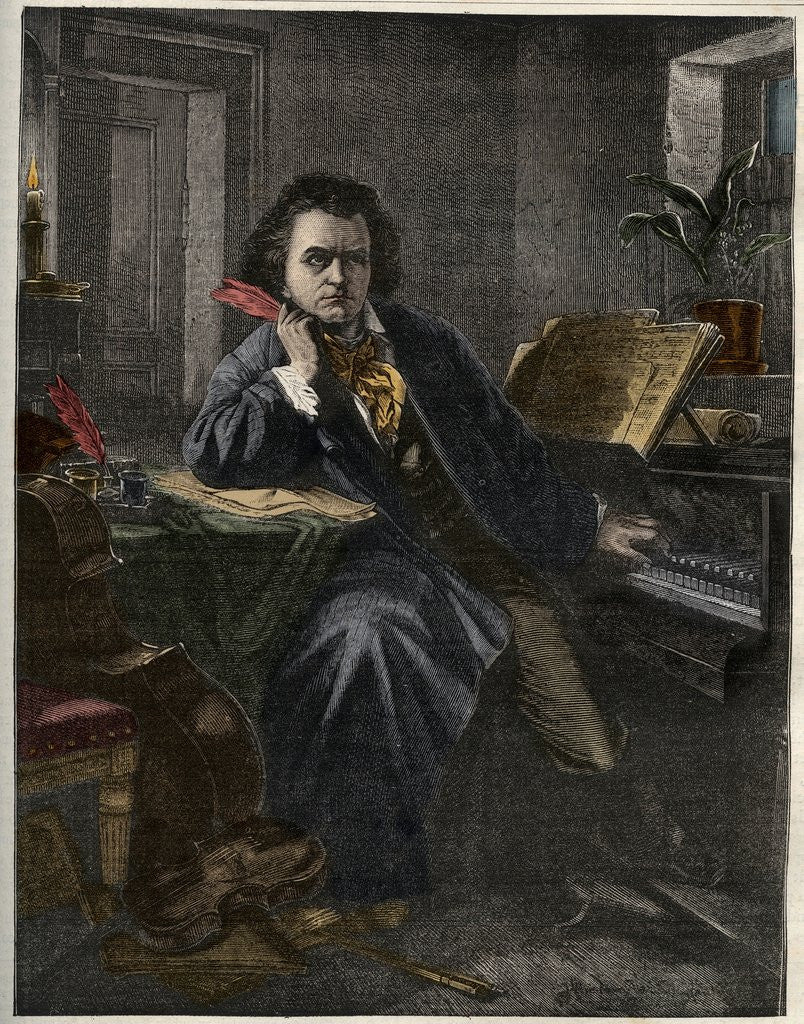
Beethoven’s life has become an important cultural reference point in discussions about deafness and artistic achievement.
Within disability studies literature, Beethoven is often cited as an example of how disability does not eliminate intellectual capability. Scholars analyzing disability representation in the arts frequently highlight how Beethoven’s achievements challenged historical stereotypes about hearing loss.
At the same time, historians caution against romanticizing disability. Beethoven’s letters clearly show that his hearing loss caused profound emotional distress and social isolation.
Nonetheless, his persistence in composing despite these challenges continues to inspire discussions about disability, creativity, and resilience.
Communication Accessibility in the Modern World
During Beethoven’s lifetime there were few technologies available to support people with hearing loss. Communication barriers often led to social isolation and limited participation in public life.
Today, accessibility technologies have transformed how Deaf and hard of hearing individuals participate in education, employment, and public events.
One of the most effective accessibility tools is Communication Access Realtime Translation (CART). CART captioning services provide live, word for word transcription of spoken communication during lectures, conferences, meetings, and online events.
For universities, healthcare organizations, and professional institutions, CART captioning ensures that participants with hearing loss can follow discussions in real time.
Modern accessibility policies increasingly recognize that communication access is essential for equal participation. Institutions that implement captioning and other accessibility tools create environments where individuals can contribute fully regardless of hearing ability.
Why Beethoven’s Story Still Matters
Beethoven’s life continues to hold powerful relevance for modern discussions about disability and creativity. His career demonstrates that hearing loss does not eliminate intellectual capacity or artistic innovation. At the same time, his personal struggles remind us how challenging communication barriers can be without proper support systems.
Today’s accessibility technologies, including CART captioning services, help ensure that individuals who are Deaf or hard of hearing can fully participate in education, professional environments, and public life.
For institutions committed to accessibility, Beethoven’s legacy serves as a reminder that creativity, knowledge, and leadership can come from individuals with diverse abilities when barriers to communication are removed.
References
Examples of scholarly sources referenced in the discussion include:
- Oxford Music Online
- Cambridge University Press musicology publications
- Music Theory Spectrum (Society for Music Theory)
- JSTOR academic archives on Beethoven’s late style and music theory
- Disability studies research examining representations of deafness in cultural history