
Helen Keller’s legacy occupies a central place in disability rights history. Yet her significance extends beyond biography. For university accessibility departments, healthcare administrators, compliance officers, and institutional leaders, Keller’s life offers a framework for understanding the evolution of communication access, Deafblind education, and systemic inclusion.
Her story is not primarily one of personal triumph. It is a case study in what becomes possible when structured communication access is provided. Modern CART captioning services, interpreters, and accessible higher education environments reflect an expansion of the principles first demonstrated in Keller’s education.
Early Life and the Foundations of Deafblind Education
Helen Keller was born in 1880 in Tuscumbia, Alabama. At 19 months of age, she experienced an illness, widely believed to have been scarlet fever or meningitis, that resulted in the loss of both vision and hearing. Without access to a formal language system, she developed home signs to communicate basic needs.
In 1887, Anne Sullivan, a graduate of the Perkins Institution for the Blind, began working with Keller. Sullivan introduced structured tactile sign language, manually spelling words into Keller’s hand. The pivotal moment often cited in educational literature occurred at the water pump, when Keller connected the tactile spelling of “water” with the physical sensation of water flowing over her hand. This marked the transition from associative signals to symbolic language.
From an educational standpoint, this moment reflects a broader principle documented in language acquisition research: access to a fully structured linguistic system is foundational for cognitive development. Contemporary disability studies scholars emphasize that Keller’s breakthrough was not miraculous. It was pedagogical. It demonstrated the neurocognitive importance of accessible language input during early development.
The academic field now recognizes language deprivation as a serious risk for Deaf and Deafblind children who lack early exposure to accessible language systems. Keller’s education provides one of the earliest documented examples of successful tactile language acquisition in a Deafblind learner.
The Linguistic Significance of Tactile Sign Language
Tactile sign language remains a central modality in Deafblind communication. While Keller relied heavily on manual alphabet spelling into the palm, modern Deafblind communication systems include tactile American Sign Language, ProTactile language practices, and adapted braille systems.
Anne Sullivan’s instructional methods were structured, repetitive, and linguistically systematic. She did not simplify language beyond recognition. Instead, she provided consistent exposure to vocabulary and grammar. This aligns with contemporary research on bilingual bimodal development and accessible language acquisition in Deaf children.
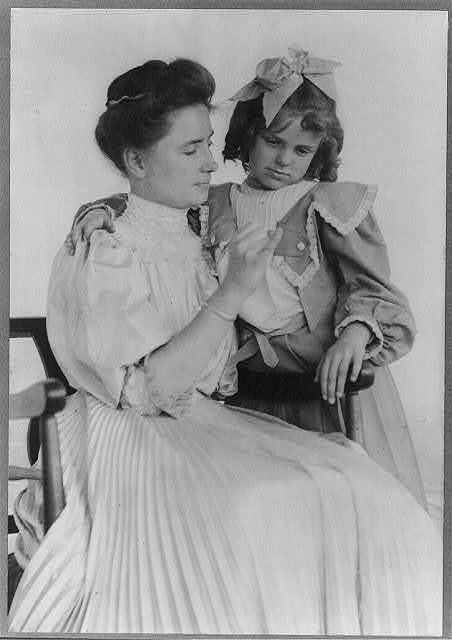
Keller later learned to read braille in multiple languages and developed speech through intensive training. However, academic analyses emphasize that her intellectual development was grounded in early tactile language access. Without that foundation, higher education would not have been possible.
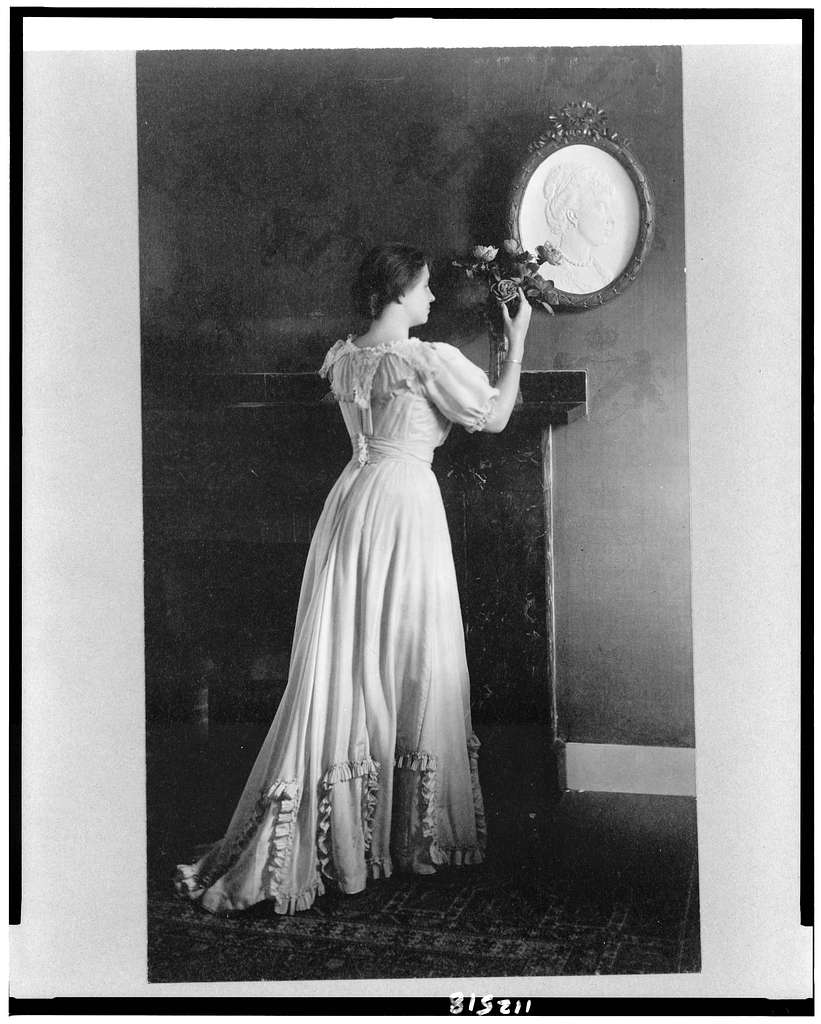
Keller graduated from Radcliffe College in 1904, becoming the first Deafblind person to earn a Bachelor of Arts degree. This achievement was institutionally significant. It challenged prevailing assumptions that individuals with combined sensory disabilities lacked intellectual capacity.
From a disability studies perspective, Keller’s graduation represented a structural disruption of exclusionary norms in accessible higher education.
Beyond Biography: Disability Advocacy History
Helen Keller authored 12 books, including The Story of My Life, and became an international lecturer. She advocated not only for disability rights, but also for labor rights, women’s suffrage, and social reform.
Scholars in disability advocacy history note that Keller’s political engagement is often minimized in popular retellings. She was a member of the Socialist Party and spoke openly about systemic inequality. Her disability advocacy intersected with broader critiques of economic and social injustice.
Academic discourse increasingly situates Keller within the early foundations of disability rights history rather than isolating her as an inspirational figure. Her work reframed disability from an individual deficit to a societal responsibility.
This shift in framing is critical. It aligns with what would later become the social model of disability, a framework recognizing that barriers arise not from impairment alone, but from inaccessible environments.
Reshaping Public Attitudes Toward Intellectual Capability
In the late 19th and early 20th centuries, institutionalization and educational exclusion were common for individuals with sensory disabilities. Keller’s academic achievements provided counterevidence to prevailing pseudoscientific claims about intellectual inferiority.
Her public visibility had a measurable cultural impact. Newspapers covered her lectures. Universities debated accessibility. Institutions were compelled to reconsider admissions policies.
Disability studies literature frequently references Keller as a symbolic turning point in public discourse. While change was gradual, her visibility disrupted assumptions about cognitive capacity and educational potential.
It is important not to romanticize this shift. Structural exclusion persisted for decades. However, Keller’s presence in higher education established a precedent. Access could produce academic excellence. The barrier was not ability, but communication access.
From Historical Advocacy to Modern Compliance Frameworks
The evolution from Keller’s era to contemporary accessibility law reflects a shift from moral persuasion to enforceable rights.
In the United States, the Americans with Disabilities Act and Section 504 of the Rehabilitation Act formalized institutional obligations. Universities, healthcare systems, and employers are now legally required to provide effective communication access.
Effective communication is not satisfied by minimal accommodation. It requires parity. For Deaf and Deafblind individuals, this may include tactile sign language interpreters, braille materials, assistive technology, or real time captioning.
The legal standard focuses on whether communication is as effective as it is for nondisabled peers. This standard reflects principles that Keller’s education implicitly demonstrated: when language is accessible, participation becomes equitable.
Failure to provide appropriate access exposes institutions to compliance risk, litigation, and reputational harm. More importantly, it perpetuates systemic exclusion.
The Evolution of Communication Access: Where CART Captioning Services Fit
While Helen Keller was Deafblind and relied primarily on tactile methods, her legacy informs broader communication access frameworks.
Modern institutions serve individuals across a spectrum of hearing and vision conditions. Some individuals are Deafblind. Others are late deafened adults. Others are hard of hearing professionals in hybrid work environments.
CART captioning services provide real time captioning that converts spoken language into text instantly. In accessible higher education, this allows students to follow lectures, participate in seminars, and review transcripts for study purposes.
In healthcare settings, real time captioning supports informed consent and accurate understanding of complex medical information. In government and corporate environments, it ensures equal participation in meetings and public briefings.
CART captioning services do not replace interpreters. They complement multimodal access strategies. For individuals who rely on text rather than sign language, real time captioning can be the most effective communication tool.
From a structural perspective, CART represents the technological evolution of the same principle demonstrated in Keller’s education: language access drives participation.
Accessible Higher Education as a Continuing Obligation
Universities today operate in an environment shaped by disability rights history. Accessible higher education is no longer discretionary. It is embedded in accreditation standards, compliance audits, and institutional policy.
Yet gaps remain. Automated captioning systems often produce significant error rates, particularly with specialized vocabulary. For academic institutions, accuracy matters. Misinterpreted terminology can alter meaning and affect educational outcomes.
Professional CART captioning services provide trained human captioners who understand technical language, discipline specific terminology, and contextual nuance.
For institutions committed to communication equity, the question is not whether access should be provided, but how to ensure it meets professional standards.
Helen Keller’s presence at Radcliffe challenged institutions to reconsider exclusion. Modern institutions must ensure that communication access systems are robust enough to support full academic participation.
Reframing the Helen Keller Legacy for Institutional Leaders
The Helen Keller legacy should not be confined to commemorative articles or symbolic references.
For institutional decision makers, her life underscores three structural lessons:
- Language access determines educational access.
- Communication barriers are institutional responsibilities.
- Inclusion requires infrastructure, not inspiration.
Disability advocacy history demonstrates that progress occurs when access becomes embedded in policy, funding, and operational systems.
CART captioning services form part of that infrastructure. They are not auxiliary features. They are mechanisms that operationalize compliance and equity.
Strengthening Communication Access Today
The evolution from tactile sign language instruction in the late 19th century to modern real time captioning reflects technological advancement, legal reform, and sustained advocacy.
Institutions that prioritize communication access reduce compliance risk, improve educational outcomes, and demonstrate measurable commitment to equity.
Accurate Realtime Inc. provides professional CART captioning services designed for higher education, healthcare systems, government agencies, and corporate environments. Our real time captioning solutions support effective communication in classrooms, conferences, public meetings, and hybrid work settings.
Helen Keller’s legacy illustrates what becomes possible when language is accessible. The responsibility now rests with institutions to ensure that communication access is not incidental, but systematic.
To strengthen your communication access framework and align with ADA and Section 504 obligations, contact Accurate Realtime Inc. to implement professional CART captioning services tailored to your institutional needs.
Communication equity is not symbolic. It is operational.