Introduction
Hearing loss affects hundreds of millions of people worldwide, yet widespread misconceptions about hard of hearing individuals remain common in workplaces, universities, healthcare systems, and public institutions. According to the World Health Organization, more than 430 million people globally experience disabling hearing loss, and this number is expected to rise significantly in the coming decades.
Despite this prevalence, many institutional policies and communication practices continue to reflect outdated assumptions about hearing ability, assistive technology, and communication needs. These myths can lead to inadequate accessibility planning, communication barriers, and reduced participation in education, employment, and public life.
Understanding the realities of hearing loss is essential for organizations responsible for accessibility and compliance. Evidence from audiology, disability studies, and communication research shows that hearing loss is highly diverse, and effective accessibility solutions often require multiple communication supports.
The following sections examine several common myths about hard of hearing individuals and provide evidence based explanations that clarify the realities of communication access.
Myth 1: Hard of Hearing Individuals Can Hear Most Things If They Try Hard Enough
One of the most persistent misconceptions is that people who are hard of hearing can understand speech simply by concentrating more or “listening carefully.”
In reality, hearing loss involves physiological limitations in the auditory system. Even with intense concentration, the brain cannot interpret sound frequencies that are not being transmitted effectively through the ear.
Research in audiology shows that hearing loss often affects the ability to distinguish speech frequencies, especially consonants that provide clarity in language. Background noise, overlapping conversations, and reverberant environments can make speech comprehension extremely difficult even for individuals using hearing aids.
Studies published in the Journal of the American Academy of Audiology demonstrate that listening effort increases significantly for individuals with hearing loss. Sustained listening effort can lead to cognitive fatigue, reduced comprehension, and increased stress.
This means that accessibility solutions must focus on improving signal clarity rather than expecting individuals to compensate through concentration.
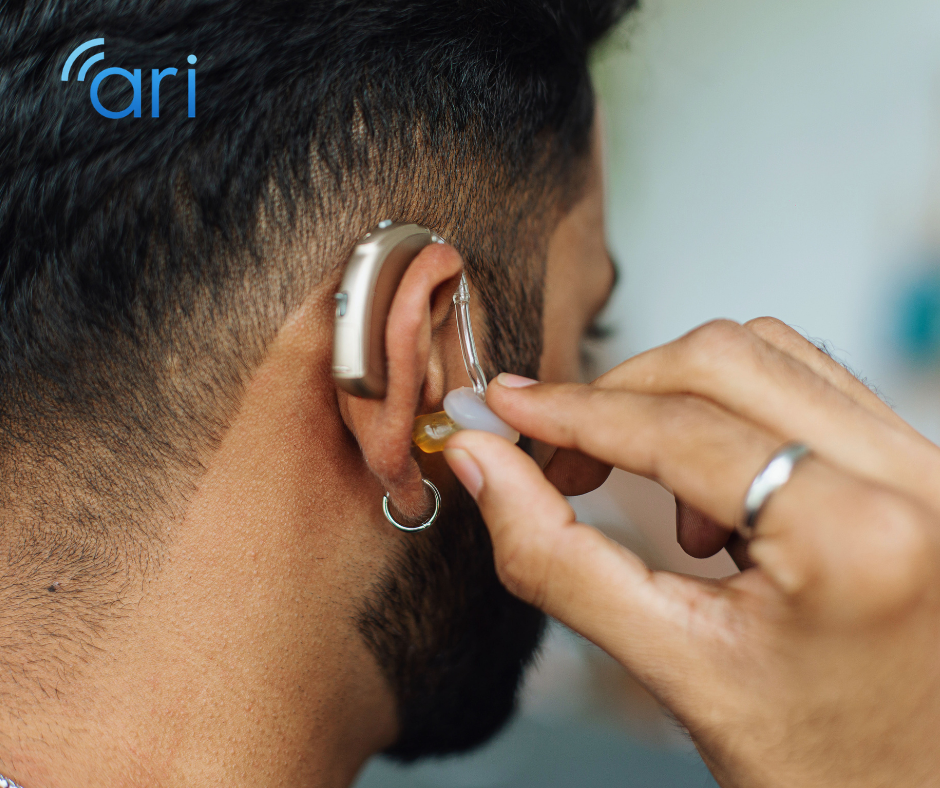
Myth 2: Hearing Aids Restore Normal Hearing
Another common misconception is that hearing aids function like eyeglasses and fully restore hearing.
Hearing aids amplify sound, but they do not recreate natural hearing. Amplification can improve access to certain frequencies, but it also amplifies background noise and environmental sounds.
Speech perception still depends on many variables, including:
• Type and severity of hearing loss
• Acoustic environment
• Distance from the speaker
• Speech speed and clarity
• Presence of multiple speakers
Audiology research consistently shows that hearing aids improve sound detection but do not fully resolve speech comprehension challenges in complex environments.
For example, studies in the Ear and Hearing journal indicate that even advanced hearing aid users frequently experience difficulty in noisy or reverberant settings such as lecture halls, conferences, and large meetings.
Because of these limitations, many hard of hearing individuals rely on additional accessibility tools such as real time captioning or assistive listening systems.
Myth 3: All Hard of Hearing Individuals Use Sign Language
Another widespread misunderstanding is that people with hearing loss primarily communicate using sign language.
While sign languages such as American Sign Language (ASL) are central to Deaf culture and community, many hard of hearing individuals do not use sign language as their primary language.
The majority of people with hearing loss develop spoken language first, particularly those who experience hearing loss later in life or who are raised in hearing families.
Research in Deaf studies and sociolinguistics shows that communication preferences vary widely depending on factors such as:
• Age of hearing loss onset
• Educational background
• Cultural identity
• Access to sign language education
• Primary language development
For many hard of hearing adults, written language and speechreading play an important role in communication. Real time captioning therefore becomes a critical accessibility tool because it provides immediate text access to spoken information.
Myth 4: Lip Reading Solves Most Communication Problems
Lip reading, often called speechreading, is commonly assumed to be an effective substitute for hearing.
However, speechreading alone provides limited information about spoken language. Many speech sounds look identical on the lips. For example, sounds such as “p,” “b,” and “m” are visually indistinguishable.
Research cited in linguistics and communication studies suggests that even highly skilled speechreaders typically capture only a fraction of spoken language through visual cues alone.
The remaining information must be inferred using context, prior knowledge, and guesswork. In fast paced discussions, technical presentations, or environments with multiple speakers, lip reading becomes even less reliable.
As a result, relying on lip reading without additional accessibility supports can significantly reduce comprehension.
Myth 5: Hearing Loss Only Affects Older Adults
Hearing loss is often incorrectly associated exclusively with aging.
While age related hearing loss is common, many hard of hearing individuals are working professionals, university students, and young adults.
The National Institute on Deafness and Other Communication Disorders reports that hearing loss can occur at any stage of life due to factors such as:
• Genetic conditions
• Noise exposure
• illness or infection
• Ototoxic medications
• Traumatic injury
Because hearing loss affects people across all age groups, accessibility planning must be integrated into educational institutions, workplaces, conferences, and healthcare environments.
Assuming that hearing loss is rare among younger populations can lead to underprepared accessibility policies and inadequate communication support.
Myth 6: Automated Captions Provide Sufficient Accessibility
The growth of automated speech recognition systems has led some institutions to believe that automated captions fully address communication access.
While automated captions can provide partial support, research shows that automated caption accuracy often drops significantly in complex speech environments.
Factors that reduce accuracy include:
• Multiple speakers
• Technical vocabulary
• Accents or dialects
• Background noise
• Fast speech rates
Studies in accessibility research and human computer interaction indicate that automated caption error rates can remain high in professional settings.
For individuals who rely on captions for full comprehension, these errors can result in missed information, misunderstanding, or exclusion from discussions.
Professional captioning services provide higher accuracy and real time corrections that automated systems cannot consistently achieve.
Impact of These Myths on Accessibility and Communication
Misconceptions about hearing loss influence decision making in education, healthcare, employment, and public policy.
When institutions assume that hearing aids or lip reading are sufficient, they may fail to provide appropriate communication access. This can lead to several consequences:
• Reduced academic participation for students
• Workplace communication barriers
• Miscommunication in healthcare settings
• Limited access to public events and training programs
Research in disability studies emphasizes that accessibility barriers are often created by environmental and institutional design rather than individual impairments.
In other words, communication barriers frequently arise when systems are built without considering diverse communication needs.
Correcting misconceptions is therefore an important step in building inclusive environments.
How CART Captioning Improves Communication Access
Communication Access Realtime Translation, commonly known as CART captioning, provides a highly effective solution for many hard of hearing individuals.
CART captioning involves trained captioners who convert spoken language into text in real time. The captions are displayed on screens, laptops, or mobile devices, allowing participants to follow discussions as they occur.
Professional CART captioning offers several advantages:
High accuracy
Human captioners can interpret context, technical terminology, and speaker changes more effectively than automated systems.
Real time comprehension
Participants receive immediate access to spoken information during lectures, meetings, conferences, and medical appointments.
Flexible delivery
CART captioning can be delivered onsite or remotely through platforms such as Zoom, Microsoft Teams, or streaming services.
Accessibility compliance
Providing professional captioning helps institutions meet accessibility requirements and improve communication equity.
Universities, government agencies, corporations, and healthcare systems increasingly integrate CART captioning into their accessibility strategies to ensure inclusive communication.
Conclusion
Misconceptions about hard of hearing individuals remain widespread despite decades of research in audiology, Deaf studies, and accessibility policy. These myths often lead to inadequate communication accommodations and systemic barriers in education, employment, healthcare, and public life.
Evidence consistently shows that hearing loss is complex and that accessibility solutions must address real communication needs rather than relying on outdated assumptions.
Professional CART captioning services provide a practical and effective way for institutions to improve communication access, support participation, and meet accessibility obligations.
Organizations that understand and address these myths are better positioned to create inclusive environments where information is accessible to everyone.